niedziela, 2 grudnia 2012

Call Of Duty Black Ops II Wii U version - Review


Question the morality of Call of Duty’s unrelenting annual releases all you like, Treyarch has genuinely outdone itself with Black Ops 2. The hard-hitting campaign packs in as many shocking scenes as it does explosions, and mixes dual plots lines spanning separate time frames with player choices that have a valid effect on events and, in turn, your ending. Multiplayer expands with a new score streak system, and the Zombies mode has received similar expansion, with a new open layout in ‘Tranzit’ mode and new eight-player gameplay options.
Black Ops 2 is, in spite of its shouty forum critics, a stellar performance from Treyarch. So how does it stack up on Wii U? To put it simply, it’s damn near identical to the Xbox version. That, by the way, is a good thing.
But there are subtle differences. Some for the better, others not so much – and those differences are the things I’ll focus on in this review (check out the review of the Xbox 360 version here for your regular critique).

MODES

The Wii U version of Black Ops 2 is near indistinguishable from the Xbox 360 version. All three of the main gameplay modes – campaign, multiplayer and zombies – are present and intact. 5.1 surround sound (via HDMI only) is supported, and all of the conventional button controls carry over seamlessly to the GamePad’s deceptively comfortable twin-analogue setup.
BlackOps2WiiU_02
Visually, Treyarch has ported over all of the textures and effects perfectly, and that slick 60-frames-per-second engine makes it to Wii U with near-identical results to Xbox. With the exception of some very occasional dips in frame rate during scenes of high intensity, you wouldn’t tell the difference.

CONTROLS

Now for the important stuff, the question that will hang over the Wii U version of every multi-format release: How does Black Ops 2 make use of the GamePad controller?
The coolest feature served up by the addition of that extra screen is its unique alternative to split-screen play. If you have a second player on a single Wii U system, the game gives you the option to have one player use the TV, with a Pro controller or Wii Remote/Nunchuk in hand, while the other plays on the GamePad screen.
Traditional split-screen is still an option, but for those who hate having that trimmed letterbox view of the world, Wii U’s two-screen alternative is brilliant. I did notice a slight and occasional drop in frame-rate for the TV player, and detail is reduced slightly, but considering the Wii U is being asked to render two entire screens separately, performance holds up well.
BlackOps2WiiU_06
Other uses of the GamePad screen affect the multiplayer mode. While playing on the TV, the GamePad screen displays a full overhead view of the map. The obvious benefit is an expanded view of the landscape beyond that of the common radar. Yet it doesn’t completely render the traditional radar obsolete since shifting your focus from the screen down to the GamePad is a significant inconvenience compared to the microsecond flick of the eye required to check the on-screen HUD. It leaves you more vulnerable; I certainly endured a few deaths paying too much attention to the GamePad map.
On the other hand, it serves as a great aid to those new to a map, or those who have difficulty fully grasping the layout of a given map. Wii U players will also, over time, have a better idea of compass-point references (which way is north, south, etc.).
It’s also worth noting that this map view is still displayed when playing the game’s Hardcore listings – a mode in which the radar is completely removed on the other three platforms. But, more in line with other versions, player positions are only exposed via an active UAV, so it’s not a significant perversion of the purity of the Hardcore mode (my personal preference).
That’s not all for GamePad features. On the left of the touch screen are ‘class’ selection options, which allow you to change your class mid-game without having to enter the pause screen menu. And on the right edge of the screen are giant touch buttons for activating score streak items.
Shoving all of that to one side, you also have the option to, at any time and in any mode, switch full gameplay over to the GamePad screen, liberating you completely from the TV. Full GamePad play hasn’t particularly appealed to me. Until now.
BlackOps2WiiU_04
Playing Black Ops 2 online from the comfort of my bed has been an absolute revelation. I love it. More than any other game on the system so far, Black Ops 2 demonstrates Wii U’s unique ability to serve up console gaming with all the conveniences of a portable. And I’m partial to quick 3DS sessions before sleep, so this is quite a treat.
That 6-inch screen gladly lives up to the task too, and is large enough to accommodate the chaos of Treyarch’s FPS. I had no real issue spotting targets in the distance and hitting the mark. It runs every bit as smoothly as on the TV, and still looks great. It’s sad to think that this is how we had all hoped Black Ops: Declassified on Vita would have been like. Oh well.
In terms of actual gameplay, Treyarch has fortunately resisted any niggling temptation to include gimmicky motion or tilt controls, keeping all of the in-game mechanics grounded firmly on the buttons and twin analogue sticks, where they should be.
The game defaults to a slightly different button control layout, with jump, reload, crouch and ‘weapon swap’ commands all rejigged, presumably to accommodate the fact that the GamePad’s right analogue stick rests above the face buttons, instead of below them as on its competitors. But Treyarch was courteous enough to include a “Classic” controls option, which puts all those commands back where they are respective to the Xbox and PS3 versions.

MULTIPLAYER

Online play, in terms of content, is uncompromised on Wii U except for the lack of Elite support. The servers hold up; it plays as smoothly as you’d expect and I encountered no problems with lag or other technical issues. I didn’t get to test the ‘party’ or ‘game invite’ systems due to a lack of Wii U-owning friends.
BlackOps2WiiU_05
If I have one major complaint of the Wii U’s multiplayer, it’s the lack of players. At the time of writing, there were 195,815 players on the Xbox version. Wii U? Not even half of that. Wii U players totaled a pitiful 453.
This makes finding a game in anything other than the common Core Team Deathmatch playlist near impossible. Bare in mind the Wii U is barely two weeks old, was only available in the US at the time of this review, and is pretty much sold out in that region. This situation will inevitably improve, particularly after Christmas as consoles are liberated from their pretty wrapping paper and as the console gains ground in other parts of the world. But right now it’s a huge hindrance to the game’s main attraction.
Also, the game supports voice chat on Wii U, but the console ships without a compatible microphone, and the official peripheral is a $25 option which seemingly no one bought. So while, for better or for worse, Black Ops 2 on other systems plays host to a buzz of vocal players, there’s not a peep out of the Wii U community (MiiVerse aside). The silence is blissful in public games that are usually plagued with feisty 10-year-olds, but the fun of playing with friends will suffer without each of you making the necessary added investment.

BOTTOM LINE

BlackOps2WiiU_03
Nintendo gamers can finally join the Call of Duty party, free of the drastic compromises associated with Wii’s tired old predecessor. Black Ops 2 on Wii U lives up to its Xbox counterpart (that being slightly superior to the PS3 version) in almost every way. The lack of CoD Elite support and live video streaming is irrelevant to your enjoyment of the actual game, and additionally insignificant next to the lack of players at the moment – a limitation that will subside as the user base grows.
The GamePad features are no revolution, but Treyarch makes good use of the second screen without tacking on worthless gimmicks, delivering the excellent experience that is Black Ops 2 in all its glory with or without your TV. While the Xbox 360 still reigns supreme on the back of its fuller online community, if the Wii U is your sole HD platform stick Call of Duty: Black Ops 2 at the top of your purchase list.

ZombiU - Review


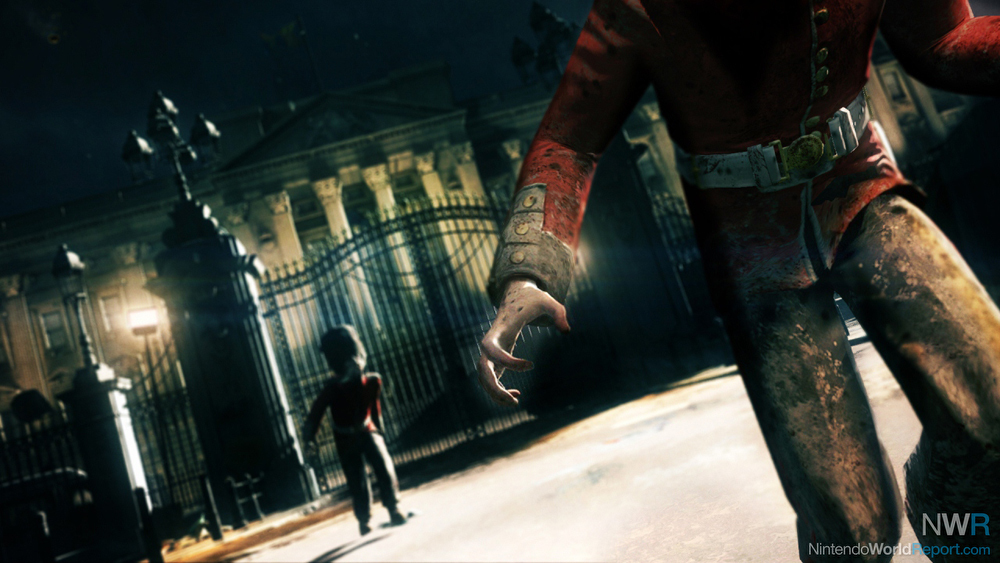
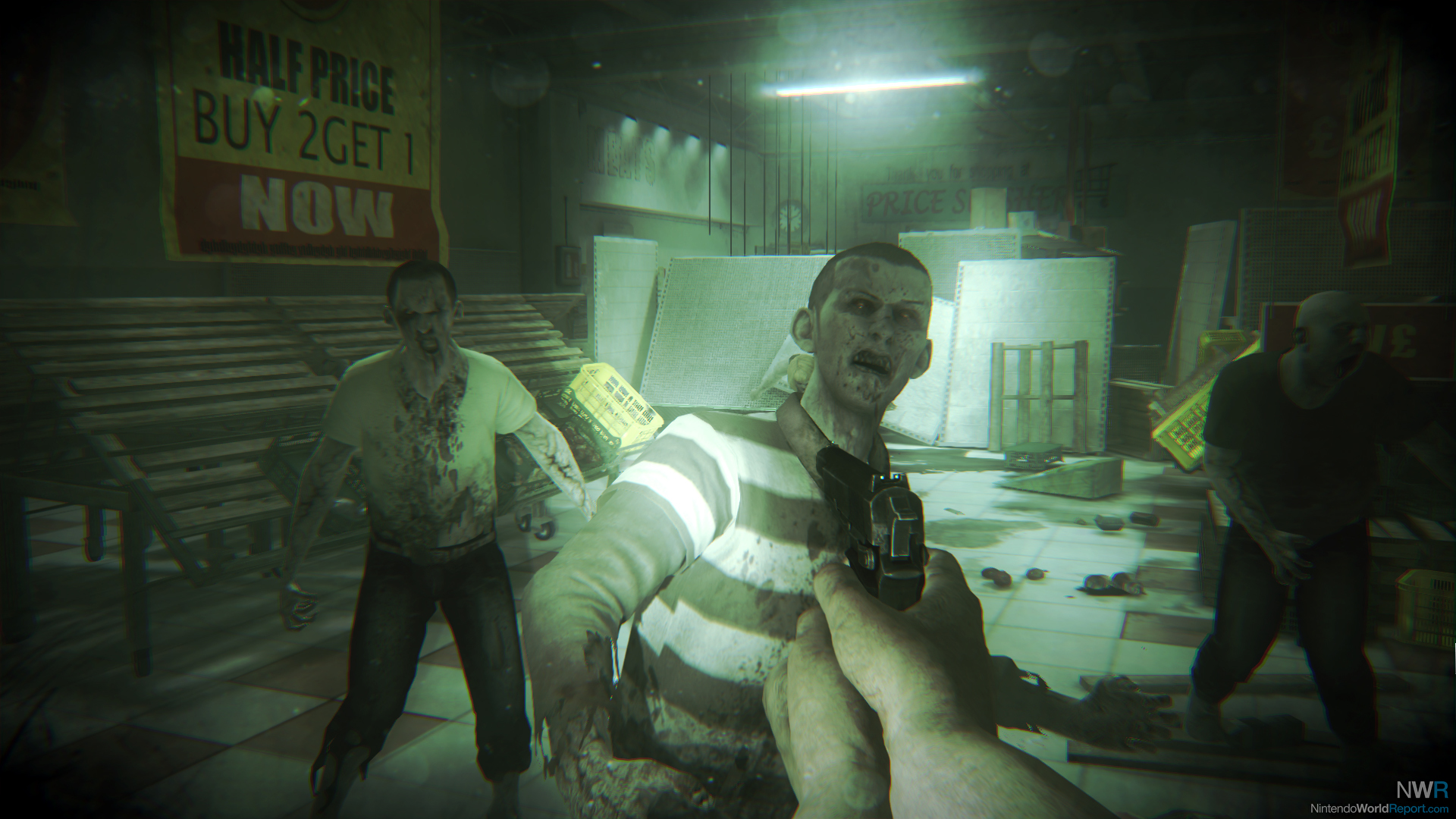
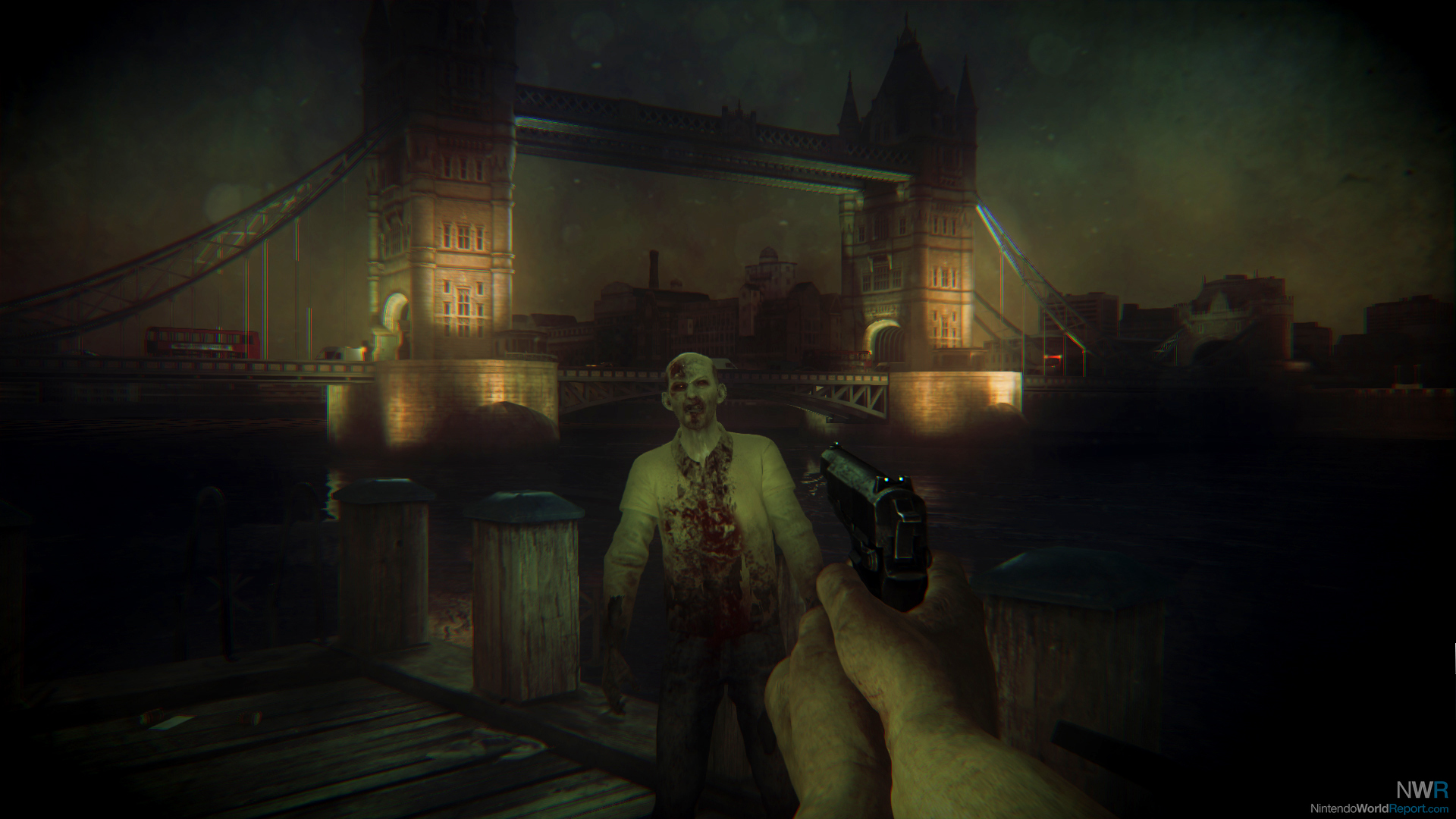
ZombiU is terrifying. Let’s get that out of the way early. This is a game that hammers home how fleeting life is, over and over again. It’s a game that makes you swear out loud with frustration, and a game that has your heart racing with every hit of a cricket bat to a zombie’s rotting skull. It takes you up high, and then throws you off a building. As London burns to the ground around you, you inhabit a series of survivors from the zombie infection. How many survivors you play as all depends on you.
As you take on the role of each survivor, you begin with the cricket bat and a pistol containing six bullets. This is true no matter how far along in the game you are. How well prepared you are to handle this sort of consequence is entirely up to you, as your safehouse holds a storage box in which you can stash weapons and ammo. Every time you die, all the gear you held remains attached to the now-zombified body of your previous character. You have one chance to kill that zombie and reclaim your goods; if you die in that effort, those supplies are forever lost. You can replenish these items, as they regenerate in areas you have previously found over time, but to say that losing supplies is a setback is a major understatement.
Melee combat is slow and difficult, requiring precise timing and spacing. If you miss a shot, you leave yourself vulnerable to attack for several moments, which is all a zombie needs to kill you. Don’t fret, though: you will die a lot no matter what you do. This is the nature of the game. As you play longer, however, it’s easier to adjust to the challenges of swinging the cricket bat, becoming more proficient at beheading undead foes. Some zombies take quite a few hits to kill, so if you have to deal with a horde, you are better off advancing and retreating to maximize your chances of success.
The game requires you to use the screen on the GamePad for all non-combat tasks, such as inventory management or barricading a door. While in many games having to take your eyes off the screen may seem like bad design, in ZombiU, it’s effective in adding to the sense of panic and vulnerability. When you need to manage your inventory, you have to do so quickly and without error, or you leave yourself helpless against attacks. The inventory screen is a bit clunky, but perfectly usable without resorting to the stylus. ZombiU also uses the GamePad as a scanner. Scanning requires that you hold the L button on the GamePad, and use either the right stick or the gyro controls to move around and detect items in the distance. Unlike in games like Metroid Prime, where the story is largely revealed through scanned items, the scanner in ZombiU is mainly used to find ammo and health items. It can help identify from a distance which zombies are worth looting for supplies, and which are empty-handed. It’s occasionally used to progress the story as well, but if you find it slowing the pace too much, you can scan only as often as you feel is necessary most of the time.
The story is a bit uneventful, unfolding the tale of a prophecy that foretold the zombie apocalypse. A faceless NPC called “The Prepper,” whose sole job is preparing survivors to get by in this hellish world, guides you through the game. It’s a bit jarring when he talks to you as if you’re the same character the entire way through when clearly you’re going through multiple characters as you die, and the same goes applies to several other NPCs you meet in the game. The story feels as if it came before idea of multiple player characters was developed, and never tweaked to make the two agree. Regardless, the voice acting is well done, and lends to the realism of the bleak world.
Aside from the cricket bat, your character can use firearms, but they are easy to lose if you die, and ammo is hard to come by. You always start out with a pistol and one clip of bullets, but the pistol doesn’t necessarily seem like a better way to kill zombies once you are proficient with the cricket bat. Luckily, you can upgrade all the weapons, and those enhancements survive even when your player character does not. It’s one of the few things you can bring across from character to character, and it’s very helpful.
The longer you survive and kill zombies as an individual character, the higher the score attached to that character. This ends up being a fun way to have a high score battle with yourself as you play, and alternatively, a fun way to know how well you were doing after you die. Folks from Miiverse show up in the game as zombies as well, carrying whatever loot they had on them when they died, which is another way to compare character scores and get extra supplies. It’s a fun reminder that Nintendo has built a very subtle, but effective, social media platform running underneath the games on Wii U.
The world of ZombiU looks fantastic, for the most part. Some textures blur when you get too close to a sign or a wall, but many areas have incredible detail and are littered with embellishments that make this post-apocalyptic version of London believable. One scene in particular subjects you to a thunderstorm, and the weather effects add to the game immensely. The lighting tricks the game employs are very successful, and despite my early misgivings about blurry textures, the more I played of the game, the more impressed I was by how it looked. The world of ZombiU falls apart around you, and the mood is set early and often.
The game contains a few simple local multiplayer modes wherein one player uses the GamePad to deploy zombies, and another player uses the Wii U Pro Controller or Wii Remote and Nunchuk to play as a survivor. One mode has you capturing flags, and another simply asks the survivor to hold out as long as possible in a score attack-like mode that includes leaderboards. Neither mode seemed all that interesting when compared to the single-player campaign, but their inclusion is a nice touch. Another way in which you can compete for high scores is the Survival mode. This mode is identical to the main campaign mode, except once you die, that’s it. There are no continues. You are scored based on how long you last and how many zombies you kill, much in the same way that you are scored in the regular campaign on a per-survivor basis.
ZombiU seeks to scare the hell out of the player by making their very survival doubtful, and wildly succeeds. This game is stressful, terrifying, bleak, and, in all of that, wonderful. It is one of the best launch titles I’ve ever played, and quite simply, a return to form in a genre that has taken a distinct turn toward run-and-gun. These kinds of games are not for everyone, and some people may not like ZombiU due to its high level of difficulty or clunky combat. However, if you appreciate the qualities of the older Resident Evil games, the challenge of a game like Dark Souls, and the exploration of a Metroid-style world, this game is absolutely for you. Enter the survival horror.

Summary

Pros
  • Fantastically realized world
  • Great voice acting
  • High level of challenge
  • Scary as hell
Cons
  • Multiplayer options are limited
  • Some blurry textures

czwartek, 6 września 2012

Dark Souls: Prepare to Die Edition Review

Praise the sun! A Souls game has arrived on PC. It is surely weary. We'll let it rest, and get to the new edition's bonus content and the quality of the port in a moment. On the off chance you've been off collecting beetles for the last three years and missed Dark Souls entirely, here's a recap of why to be excited. On consoles, this began with 2009's Demon's Souls, a sleeper hit that offered a quest so hard, so hefty, so immaculately crafted that developer From Software might have hewn it from rock. It and sequel Dark Souls summoned staggering review scores, gifting a generation of jaded gamers with a cocktail of fear and self-respect. You're best off not taking your cues from Dark Souls' charming marketing slogan of “YOU WILL DIE.” While it's best known for being nipple-rippingly difficult, ultimately, it's all about the weight I was talking about earlier. That dark heft. First and foremost, this is the physical weight of your character, and the foreboding atmosphere of From Software's stunning world. Dark Souls tells the story of your hero trying to save an intriguing world which, by every possible metric, fell long ago. Abominations make their homes in the forgotten nooks of a lost civilisation. A handful of enigmatic survivors are all that's left, but you're as free to talk to them as kill them, and they're as liable to help you as to lie. Best of all, the game literally kills you off somewhere between character creation and the first cut-scene. Above all, Dark Souls seems to thrill at escaping expectations. “ Dark Souls can happily scare the crap out of you in broad daylight, with something as simple as a giant insect dive-bombing your head as you cross a narrow walkway. An example is how your character controls. Just to swing a sword sees your avatar putting their back, shoulder and wrist into the blow, leaving you to wince at the weapon's weight. Hit attack again, and you'll roll the weapon around down, up and around, maintaining its momentum to strike once more, quicker this time. But every single attack, every block with your shield, every panicked evasive roll, takes a fat bite out of your endurance meter. Never mind whatever action games you've played before, you have to learn to fight all over again because, simply put, you're only human. That might not sound so bad when you're gleefully taking apart a zombie with a mace. How are you going to deal with a pack of feral dogs? Or a rat as big as a Land Rover? These are the questions Dark Souls asks you, before leaning back in its high-backed leather chair to light a cigarette. It never rushes you. It never needs to. It simply tells you, to your face, that certain death lies this way. And then it tells you to walk. Which brings us to the radioactive feather in Dark Souls' cap. Death is something you fear. If you die, you don't just get cast back to the nearest waypoint. You run the risk of losing any unspent XP or precious humanity points. Never mind fleeing from ghosts in brooding catacombs. Dark Souls can happily scare the crap out of you in broad daylight, with something as simple as a giant insect dive-bombing your head as you cross a narrow walkway. All of which is why Dark Souls has a reputation of being a colossal beast, but also so addictive. If a game's capable of making you grin with each new item you furtively recover, imagine how it feels to stand over a slain boss. On a minute to minute level, though, what makes Dark Souls moreish is its suffocating consistency. That down-to-earth, tactile combat is a reason to play Dark Souls in and of itself, but it also functions to immerse you in the game's similarly plausible world. “ What defines Dark Souls is the moment you decide you're literally out of your depth, and turn the hell around, with all your precious XP intact, to go explore somewhere else. But for the most part, you won't do that. You Will Die. You're not completing levels, or even doubling back in the Metroidvania style. You're just exploring, taking step after nervous step through a foul wonderland that oscillates between great cruelty, and moments of sweet relief. Its great achievement is in not feeling like a game world at all, much as Minecraft didn't, and it's a similar joy to explore. This simply feels like a place where you really, really shouldn't be, where every step is heavy with dread. Let's put it this way - it's not the petrifying Capra Demon boss that defines Dark Souls. It's not the key he drops, that leads you to a room where you fight a disgusting, cannibalistic chef. It's not the labyrinthine sewer that the chef guards, or the village you find beneath the sewer, or the putrid moat the village is built above. It's not the nauseating creatures that live in the moat, nor is it the terrible beast that lays its eggs in them. It's not the staircase you find behind her, leading you down still further. What defines Dark Souls is the moment you decide you're literally out of your depth, and turn the hell around, with all your precious XP intact, to go explore somewhere else. But for the most part, you won't do that. You Will Die. Saving Dark Souls from the loneliness that haunted the open worlds of say, Metroid, is its online functionality, which was designed with the same blend of accuracy and fearless creativity that defines the rest of the game. Players can scratch messages into the ground, which are pulled at random into your own world. Watch Out For Wizard, you'll find, lying ominously before a closed door. Or more dubious stuff still - Step Off, written over a chasm into blackest darkness. More traditional multiplayer is limited to blue and black phantoms - other players invading your world, to help or assassinate you, for their own selfish aims. Offering some of those moments of relief are the game's bloodstains. Touch one, and you'll see the final seconds of a real-life player, which is a bit like opening a present. Perhaps you'll get a poignant warning, as they flee from something you didn't spot, or you'll just laugh as they go cartwheeling lackadaisically off a ledge. “ The mouse and keyboard controls in the Prepare to Die edition are a war crime. Losing the gentle acceleration of analog movement would have been bad enough, but the mouse doesn't control the camera so much as wrestle it around on a rubber leash. All of this survives, totally intact, in the PC port, with a single caveat - you must own a Xbox 360 pad, or suitable equivalent. The mouse and keyboard controls in the Prepare to Die edition are a war crime. Losing the gentle acceleration of analog movement would have been bad enough, but the mouse doesn't control the camera so much as wrestle it around on a rubber leash. Meanwhile, the GUI's adaption to the keyboard is just awkward. All told, you could be playing on an emulator. If you don't own a pad but somehow end up with Dark Souls running on your PC, remove the power cable from the back with a barge pole. But if you do own a pad, and quickly grab this 80Kb fan hotpix, which unlocks the game's resolution from 1024x720, you'll be able to enjoy the definitive edition of Dark Souls until the Artorias of the Abyss DLC arrives for consoles this winter. That content's packed in the PC version for free, and we're pleased to announce that it's... fine. It's just fine. The best thing we can say is that it's not ungenerous. It's three whole new areas for you to plunge through like a nervous knife, each packed with the epic bosses, new items, new spells and unsettling NPCs that you've come to expect during the rest of the game (Artorias of the Abyss is, sadly, squirreled away towards very end of Dark Souls). You'll cut off the tail of a chimera to use as a whip. You'll descend deeper than you've ever been before. But throughout, there's the niggling sense that this wasn't the work of the entire From Software team. This being DLC that's basically a given, but it shouldn't feel that way. The first new area, Royal Woods, repurposes a ton of art assets from Dark Souls' other trembling forest of Darkroot Garden. The next area, Oolacile Township, is a definite high point – a cluster of slumped towers you have to pick your way down – but it fails to surprise in the way that Dark Souls' best areas do. Finally, the Chasm of the Abyss itself is as barren, rather than as bleak, as the name implies. All of that said, of the four new bosses, the duel with the disturbingly fast Knight Artorias is my new favourite of any Souls game. Good luck with that. Closing Comments The need for a pad mires an otherwise perfect port. This is Dark Souls, coming at us larger and more intimidating than ever. A dungeon crawler that understands that the crawling, the exploration, is as important as the combat. An action game that dares to teach us patience, and caution. A video game with respect for the player, that dares us to be an actual hero. Not once when you die does Dark Souls help you back up, not once does it let up in its astonishing quality or turn to padding, and not once do the ideas stop coming. Buy it.

środa, 5 września 2012

Counter-Strike: Global Offensive Review

Death is a great teacher. Failure in Counter-Strike: Global Offensive is, as it always has been for this series, the greatest way to learn where you should have gone, what you shouldn't have done, and how you could have done better. Counter-Strike players spend a lot of time learning -- consequently, they are always getting better. Growth is an important factor in Global Offensive, especially if you're coming into Counter-Strike fresh or after a sabbatical. This is an extremely hardcore, skill-based first-person shooter, and it forces you to think differently than other modern shooters. If you’re a Call of Duty player, you’re going to need to change your play style to succeed here. Counter-Strike also tries developing into something new here as well, despite doing little to push itself beyond what it’s always done best. Global Offensive modifies old maps to keep veterans on their toes, and introduces official new modes that encourage different play styles for the first time in almost 15 years. For the uninitiated, Counter-Strike: Global Offensive is a small-scale, team-based first-person shooter with permanent death. When a counter-terrorist kills a terrorist planting explosives in a classic Defusal match, or a CT escort swallows a sniper round in Hostage Rescue, the victim is dead for good and doesn't respawn until the next round. As such, players on both sides must exercise skill and care. The bomb objective, meanwhile, gives everyone a purpose. Of course matches end when everyone on a team is dead, but a clever and coordinated terrorist team will give the CTs the slip, plant their bomb, and protect the bomb site. Between rounds, everyone spends earned cash on better gear and guns, and the cycle continues. Pieces of the Counter-Strike formula are dated at this point, but the superb heart and soul of Global Offensive is timeless. Teams are small, guns are lethal, and rounds are short. There's an addictive just-one-more-round quality to it, because there's a constant desire to do better than last time, to earn a satisfying kill, or to win in a new way. Call of Duty and Battlefield vets will wonder why they can't sprint to escape enemy fire or look down the iron sights to improve aim; Counter-Strike players will feel like they walked into their redecorated home. Certain map redesigns will catch hardcore fans off guard, but the changes are for the best -- the underpass choke point in de_dust, for instance, has a new escape route. Even in the face of genre evolution, Global Offensive doesn’t care to adapt. CSGO is so dedicated to Counter-Strike's aging ideals despite market and trend changes that it brute-forces its way to success. Part of what makes it such an engaging competitive game is that killing in Global Offensive requires a wholly different skill set than other shooters. Everyone is limited to what they have and can see, with little room for character modification or on-the-fly advantages. Running and gunning is a useless play style, even if you've bought a helmet and kevlar that round, to the point that someone standing still is more likely to score the kill. Walking, crouching, or standing are your best bets to reduce the inaccurate spray of machine-gun fire. Consequently, killing in Global Offensive feels good. There's a sickening sensation to dropping someone dead because you know they're not coming back. It's also satisfying knowing you used limited resources to play smarter than your victim. If players aren't watching corners, providing covering fire, or using smoke grenades and flashbangs, they're more likely to take a headshot from a more delicate and patient triggerman. The desire to experience that distinct feeling is a strong motivator to keep playing, even when you're getting steamrolled by an obviously better team. If you've played Counter-Strike before, Global Offensive probably sounds a whole lot like Counter-Strike. Like Counter-Strike: Source before it, Global Offensive exists simply to modernize the look of the classic competitive shooter, while doing little to disrupt the core form and function. At the same time, it does enough to color outside the lines of tradition to justify your time and effort. “ There's a sickening sensation to dropping someone dead because you know they're not coming back. Fire is one of the most interesting new combat variables. Molotov cocktails and incendiary grenades either roast groups of guys or force them in another direction. Flames are a useful distraction or scare tactic, too. They're particularly useful during Demolition matches, which focus the fight at a single bomb site rather than giving terrorists two to pick between. The new and modified maps in this mode aren't as big as classic Counter-Strike arenas – entire sections have been cut off to direct teams toward a central location – but their thoughtful design is as intricate as ever. The Lake map is a standout -- there's a wide open yet densely populated yard around the bomb site, which is inside a sizable lakeside home with plenty of vantage points and hiding spots. To separate Demolition from Defusal, players can't buy between rounds. Instead, it takes a cue from the other new mode, Arms Race, in which each kill unlocks another weapon instantly. The better you do, the more you have to switch up the way you play, and because Demolition is so fast you'll need to be quick on your feet. Arms Race can get out of control, but patience pays off. Unlike other game types, Arms Race allows for respawns. It's the most chaotic and care-free mode in Global Offensive, with players throwing caution to the wind for the sake of climbing the kill ladder as quickly as possible. It's a shame there are only two maps in Arms Race -- a problem that will more likely persist on consoles than PC. If you have the option, playing the PC version is unquestionably the best way to experience Counter-Strike: Global Offensive. Mods, mouse and keyboard, and the usual PC-only options are better than the ports. Plus, Valve is much better about long-term PC support -- it abandoned Team Fortress 2 on consoles, and Portal 2's level editor was PC exclusive. If you prefer to play on consoles, Global Offensive is the same great game, with the following special bits: PlayStation 3 For those who want to play on PlayStation 3 but don’t want to deal with the imprecision of analog sticks, Counter-Strike: GO supports mouse and keyboard, giving it a pretty noticeable edge over the Xbox 360 version. If you’re feeling saucy, Move is another option, although nuance dies with the motion controller. Move is accurate, and your quick reflexes will score kills, but the unavoidable instability of holding a remote will give your cursor some seriously unpleasant wobble. Worse, moving the wand quickly can confuse the controller, which often and irritatingly misinterprets basic left/right looks as a want to turn around 180 degrees. Xbox 360 Aside from the lack of keyboard/mouse input, the Xbox 360 version of Global Offensive is functionally identical to that on PS3 -- the new radial user-interface on both platforms is as elegant as it is on PC. Because it’s a hardcore competitive game, Counter-Strike blocks party chat in an effort to combat cheating, forcing players with headsets to play with friends or brave the Wild West of obscenity that is Xbox Live. Closing Comments Global Offensive is definitely a Counter-Strike sequel -- it looks and feels familiar, with minor tweaks here and there to help balance old issues and surprise longtime players. This is a demanding, skill-based multiplayer game that's as satisfying now as it ever was, but it's for a specific kind of player. If you're not willing to learn to play different than you're used to, look elsewhere. Otherwise, this is a top-tier tactics game that will probably share the long-tailed legacy of its predecessors.

Way of the Samurai 4 Review

Like many nerdy young men, I’ve sometimes wondered if I could have made it in the days of the samurai. Sadly, not being born in Japan hundreds of years ago got in the way of that dream. But in Way of the Samurai 4, players can find out how they would have fared walking the world as a lone samurai warrior. Way of the Samurai 4 is a download-only open world action game for the PlayStation Network that allows the player to explore their morality or dark desires in the uncommon setting of a small Japanese village under constant conflict. Caught between a militant government, xenophobic nationalists and a foreign body eager for expansion, you take on the role of a Japanese ronin in the year 1853. As a nameless and masterless samurai, you journey into a small township where these three factions stand at odds. It’s the decisions that you make, the missions you accept and the success you have that determine your samurai’s fate. Right off the bat, you get dropped into a series of combat scenarios and are quickly forced to make a choice about the path your character will take. Everything seems cut and dry as you’re presented with the opportunity to save a small and delicate looking young woman from a gang of rebels. The woman is a British ambassador who has come to the small town in hopes of establishing a trade relationship while the rebels are trying to repel the outsiders from influencing their home. You can be the "good guy" and save the girl, fighting alongside the Shogunate's constables, or take the "evil path" and take a stand against local law enforcement. As you progress, you can stick to one path, try to play all sides or skip the story missions of the three factions all together and just explore the side missions of the open world. As I explored the story, things got creepy in a hurry. Saving the ambassador unknowingly led my samurai towards a relationship with the young woman... who appears to be around 14 years old. In other playthroughs, I was disturbed to find out the fetish-like love of torture of the Shogunate and his three daughters who run the town. Even though the timetable for the game's story revolves around only a few days, there was more than enough time to find out some very disturbing things about the people of this small town before culminating in a three-round fighting tournament to end my adventure. Each different combination of decisions and allegiances I made lead me on a path to one of the game's ten endings. Because of the short length of the story -- ranging between two to four hours depending on how many missions you choose to take on -- multiple playthroughs are encouraged using "Proof of Life." The "Proof of Life" concept is an interesting take on the New Game+ option seen in many action games. Instead of just carrying over your previously-established character, the world around you adapts. Choosing a lawless lifestyle where killing constables was common practice leads to an increased presence of law enforcement in the following playthrough. And having an inventory of my own previous character's items to turn to after the first battle of the new playthrough was a welcome surprise. Additionally, points are awarded after each playthrough that can be used to unlock different visual changes for each new game. In addition to the game's combat based story missions, there are some other diversions, like playing cards in the gambling den or attempting the act of night crawling. Night crawling helped provide me with one of the most uncomfortable moments I have experienced in gaming, even more than seeing the Shogunate's torture room. After meeting a woman in the day time, I needed to sneak into her home and make it into her room without being caught, subsequently jumping in bed with her in an attempt to get lucky. It might be that the intended humor of the situation is lost in translation because of differences in Japanese and Western humor, what with the disturbing choice of sound effects and animations that resembled a horny teenager jumping in to bed in hopes of losing their virginity. Thankfully, you never have to see the action once you complete the minigame challenge associated with it. The most disappointing aspect of Way of the Samurai 4 is that combat isn't very fun. I had hoped that running around a Japanese village with a sword and an appetite for mayhem would be the most promising aspect of the game, but sadly, this wasn't the case. To win a battle, you have to launch a constant barrage of attacks against an opponent to prevent them from having the time to recover health. Aside from the unusual nuisance of enemies being able to recover from stab wounds so quickly in the heat of battle, this nonstop attack method will result in fatigue that causes reduced damage from the player's attacks and quicker decay on their weapons. This ends up becoming fairly frustrating early on in your career, when your number of different attacks is still very limited and you don't have enough money to purchase many extra weapons or the items that can help them last longer. If you get caught in a battle against multiple opponents and don't have enough weapons in your stash or vitality-increasing items, things can be over before they even begin. Sadly, the game’s missions don't offer much in the way of variety. Most scenarios revolve around meeting up with an NPC, finding the cause of some conflict and arriving just in time for a small battle. This scenario gets repeated with varying degrees of difficulty, but with the combat not being very fun, the missions get old fast. Visually, Way of the Samurai 4 didn't do much to excite me. Even though I was able to unlock more customizable parts for my character with each playthrough, nothing ended up being visually impressive. The character models are limited -- especially with facial animations and range of emotion -- and the animations don't flow smoothly together. The dated animations, on top of screen tearing and random frame rate drops, killed the game’s immersive qualities. Way of the Samurai 4 can only be played with the original Japanese voice cast and English subtitles. While this works for the fans of the franchise, this likewise may deter new players from giving the game a chance, because there isn't an option for an English voice track. Also, the sometimes over the top voice acting makes some serious scenes unbelievable and gives the absurd scenes an even more extreme B-level samurai film feel. The music sometimes has the same problem where an uncomfortably cheerful tune will be playing over a tense encounter. Closing Comments With the freedom of an open world combined with inconsistent tone, it’s very hard to tell just what the development team at ACQUIRE Corp was aiming for. While the story has branching paths, none were especially engrossing or entertaining, and the repetitive combat quickly took its toll. After fighting for honor, for myself and just for the sake of causing chaos in a tiny Japanese village, Way of the Samurai 4 did show me that I would not have been a very well liked person in Japan in the 1850s. But if the real world back then was anything like this game world, I wouldn't have wanted to spend much time there anyway.

piątek, 17 sierpnia 2012

Darksiders II Review

Darksiders II represents the latest offering from developer Vigil Games, a direct follow-up to the 2010 original. Much like its predecessor, Darksiders II provides some solid action, albeit nestled amid a somewhat flawed experience. It’s also possibly the most derivative game ever made - borrowing adventure and puzzle elements from The Legend of Zelda, action from God of War, platforming from Prince of Persia, and tone from some hellfire version of Lord of the Rings. That’s not necessarily a bad thing - an amalgamation of such incredible franchises could have resulted in the game to end all games. The thing is, if you’re going to so blatantly derive material from such well-known properties, you better nail it. While Darksiders II provides a lengthy and entertaining experience for action adventure fans to sink their teeth into, in the end it never comes close to reaching the heights of the various franchises it so freely borrows from. Darksiders II further fleshes out the story of the Four Horsemen of the Apocalypse introduced in the first title - this time with War’s brother, Death, at the helm. Death believes that War has been wrongfully convicted of destroying mankind, and seeks to restore humanity to clear his brother’s name. The narrative is pretty entertaining, if not severely overdramatic. Though it should please anyone solely in the market for ‘epic,’ it lacks any trace of subtlety and often comes off as sophomoric. Given that the end result of any plot advancement is inevitably that Death needs to gather three of something and thrash some skeletons, hearing the characters go on about the old ways and soul judgement just feels a bit silly. However, if a healthy dose of ridiculous doesn’t faze you, the contrived reasons for Death’s various escapades through heaven, hell and everywhere in between do provide an amusing backdrop for his quest. The majority of the adventure comprises rather standard action fare - Death wields both a fast primary weapon and a slow but powerful secondary weapon, and you chain together moves to slash your way through the various enemies. There are also a few special abilities you gain along the way - like the ability to summon demon lords to do your bidding or to split your soul in two to solve dungeon puzzles. The action segments are enjoyable enough - inasmuch as it’s hard to make slicing up undead baddies unenjoyable. Still, it’s disappointing that most of the enemies require next to no strategy to overcome. When you do come across an enemy that requires strategy to best, the joy of slaying it is truly satisfying - but these occurrences are few and far between. Most of the time, the answer is just to wait for the enemy to make their move, dodge, then attack. It’s still fun, because dodging and attacking are fun things to do in an action game, but it does get irritatingly repetitive after several hours of the same old song and dance. One of the touted selling points of Darksiders II is that it’s far bigger than its predecessor - with a map that’s more than twice as big and a campaign that’s about three times longer than the original adventure. Unfortunately, in this case, bigger definitely isn’t better. The freedom Darksiders II offers is something to behold - you’re able to journey around huge areas as you please, slashing enemies and seeking out treasure and loot drops to your heart’s content. But the bloated environments are simply too barren and often devoid of anything interesting to do or see. Since so little is done to vary up the gameplay, the pacing drags and the length of the adventure feels more like a chore than a bonus. The main problem is that the bulk of the adventure is repetitive. While it’s completely possible to reuse game mechanics throughout a campaign and still keep it feeling fresh, Darksiders II doesn’t achieve this. You’ll find yourself climbing wooden ledges and pegs, setting off bombs, and rolling balls over and over again in exactly same way, instilling a gnawing sense of deja vu. If these mechanics were employed in varied and clever ways, that would be one thing - but they’re not. I found myself rarely challenged by any puzzle I came across, and was often astonished that I was once again expected to repeat the same menial task I had just completed in the previous dungeon, or even in the previous room. darksiders-ii-20120302091259534 This is no place for a horse. On the bright side, Darksiders II does offer up some truly epic boss fights to vary up the repetition, ones that will put your skills to the test and are truly exciting to overcome. You’ll fight all kinds of epic demons - ones that can regenerate, ones that are about 100 times your size, and ones that are just plain brutal in their assault patterns. The bosses are one of the highlights of the experience, offering a glimpse of what Darksiders II could have been had the entire quest been as varied and balanced as these memorable battles. As for gamers who don’t like fetch quests - this game is not for you. Seriously, the entire game is a fetch quest. All you do is run from area to area, fetching three of these, then three of these, then two of these, then three more of these with combat in between. As someone who honestly doesn’t mind a healthy dose of fetching in her games, Darksiders II still pushed my limits. You end up fetching so much and for so long that the majority of the game feels pretty pointless by the end. Can’t anyone in these various realms do their own errands, for crying out loud? In truth, the game would have benefitted from being a skosh smaller and a lot more focused. In this way, the original game beats its sequel, as a more linear adventure that keeps the action coming befits this franchise’s intense style of gameplay. After all, there is a limit to how long you can run through similar environments and solve similar puzzles in order to appease your bloodlust for smashing things with cool weapons. One of the game’s stronger elements is its art design and voice direction. It’s incredible that you can grow so fond of a main character who literally never emotes, as he’s wearing a skull mask for the entirety of the adventure. Death’s awesome voicework doesn't hurt either - hearing him growl at the Makers or deliver lines like, “This is no place for a Horse,” or “You find something for a change,” is inexplicably enjoyable. Even though he’s pretty impossible to relate to - being the embodiment of death and all - his design and presentation still do a great job of making him someone you want to see to his journey’s end. While too many of the environments in Darksiders II are shockingly similar, some of them are well thought out and epic to behold, as are many of the characters and enemies found within. Unfortunately, the graphics aren’t quite up to snuff with the current generation of hardware. Some of the textures are so pixilated they look like they belong on a Wii, such as the oft-used skull and bones pattern (which is alarmingly flat, and thereby entirely unconvincing). It’s a shame, as the mediocre graphics undermine the game’s inspired art design. The animations are also quite choppy, as the game suffers from some fairly frequent framerate issues. There’s rarely enough happening onscreen to justify these MMO-like graphics. It looks good enough that it usually won’t distract from the adventure, but compared to similar games like God of War 3, the graphical presentation of Darksiders II is subpar. A frustrating detractor to Darksiders II is the sheer amount of random glitches you’ll encounter along the way - ones that can’t be accounted for and appear and disappear for seemingly no reason at all. Seeing Death floating above the ground or over thin air is not uncommon, nor is pressing B to perform an action command only for nothing to happen until a few button presses later. Other random glitches I encountered include the inability to discard boots, ally AI that just stands in the corner staring at the wall, a Primary Quest icon that leads you in the wrong direction (then shift positions when you check the in-menu map), and an absence of music and sound effects until the game was reset - and that’s just to name a few. Most of these glitches only last for a short while, then disappear never to surface again. Others, like a targeting system that rarely seems to target the closest enemy or a camera that is often pointing in an inopportune direction, are quite persistent. Sadly, they’re things you’ll just have to learn to cope with if you hope to see Death’s journey to its conclusion. The funny thing is, despite its lengthy list of flaws and failures, Darksiders II still manages to offer an enjoyable experience. Despite its lack of variety, the combat is still satisfying to engage in, especially when you run across a behemoth of a boss. And even though there’s not enough to do in them, running around such huge environments is still incredible. Certain abilities you amass along the way - like the Deathgrip or the summoning ability - are terribly fun to play with, and make for some really cool dungeon moments (like dashing across a wall and Deathgripping at the last moment to reach the other side). It’s also worth noting that the game picks up considerably towards the end, finally finding its stride for the last few dungeons. The puzzles get more creative, the enemies and environments more varied - it’s just a shame it takes about 30 or so hours to get to this point. Possibly the best part of the adventure, something that all action RPG games could learn from, is its implementation of RPG elements such as equipment and customization. Weapons found on the field can be instantly equipped or sent to your inventory with a single button press. Furthermore, each piece of equipment’s stats are displayed when you walk near it, as well as how it will raise or lower your own stats should you equip it. This makes fast decision making a breeze, and greatly increases the joy of seeking out the best armor to equip Death with. Every weapon or bit of armor you equip also changes Death’s appearance, which is a cool touch in making character customization feel more personal. The concept of cursed artillery, which you can ‘feed’ other items to, is also a great way to make the underpowered loot you come across feel like less of a waste. The way equipment is handled in Darksiders II is a true revolution in RPG gameplay, and one of the most solid parts of the experience. Tapping the left stick for Death’s bird, Dust, to show you the general direction you should go, and the deeply engrained Fast Travel system (which lets you instantly warp back to certain areas on the fly) are also great innovations for the genre. It’s a true shame the game’s impressive contributions are so severely undermined by its sheer amount of flaws and glitches. Closing Comments Despite its problems, I was compelled onward in my quest with Death because Darksiders II is simply a fun game. The RPG elements and to-the-point action all make for some solid gaming, glitches and all. It’s a shame so many glaring issues hold such an ambitious endeavor back from the greatness its developers were clearly aiming for. Still, if you love action adventure games, it’s certainly worth checking out - but don’t expect it to rival the masterpieces it will inevitably call to mind.